
When futurist and trend forecaster Faith Popcorn, coined the term “Cocooning” in 1981, she wasn't just talking about a cozy weekend in sweatpants. Fast forward to 2026: her observations of this trend have amplified and our homes have become the refuge we most want to be in. This has manifested in a desired space that invites you to feel calm, layered and comfortable.
In many homes, it all comes together in the living room, and the wall holding the television has become its focal point. But that wall has more than one job. On a Tuesday night, it should fade into the background so you can sink into your favourite Netflix series. On Saturday mornings, it should invite you to browse your favourite books, and by the evening, it should help you host.
How custom built-ins can make it happen
A television on a bare wall is a black rectangle with cables, and a standard media console is sized for the product, not for your room, your collection or the way you live. Custom built-ins are designed around your space. They hide the technology, add generous storage and turn the TV wall into architecture.
One Wall, Three Lives
Movie nights. The television sits against a warm backdrop - the equipment is tucked into drawers, and the lights dim to a soft glow. With the clutter gone and the cabinetry receding, the room feels calm and the screen becomes a quiet home theatre.
Entertaining. When guests arrive, the screen steps back and the shelving takes centre stage. Open shelves and illuminated niches turn your collection into a home art gallery, with room for sculpture, glass, and the books you love. After all, not all your coffee table books fit on the coffee table.
Cocktail hour. Your wall unit can also hold a bar. A pull-out or fold-down counter, lit glass shelving for glassware and decanters, and concealed storage for bottles and barware make the bar part of the built-in instead of a rolling cart. .

Custom Media Unit - The Continuum South Beach, Miami
8 Design Tips to Get Most from Millwork
The details of the millwork are what make a wall like this work. Here are some things to consider on every project:
Balance white with warm materials. A wood-grain panel behind the screen adds warmth and keeps a large TV from feeling cold. Some panels also improve sound absorption and create a better acoustic environment.
Consider a floating base. A wall-mounted cabinet looks lighter, keeps the room airy and makes cleaning easier.
Hide the technology. Deep, push-to-open drawers hold the streaming box, sound system and cables as in the home-theatre-guest-room project below.
Go matte and deep. Matte finishes that combine warm whites with wood grain makes the millwork recede visually. The addition of a dark glass top or smoke glass cabinet doors adds a sophisticated touch (and keeps the dust out).
Embed LED lighting. Light built into shelves, niches and floating elements creates a warm evening glow and can be aimed at a specific piece of art. Add a dimmer to move from cozy to gallery in one touch.
Vary scale and contrast. A tall vertical element, a floating shelf, and slim open cubbies in white, wood, and black give the wall structure and rhythm.
Balance open and closed storage. Keep the practical items behind doors and reserve the open shelves for what you love.
Add something living. An orchid or a few branches soften the technology.
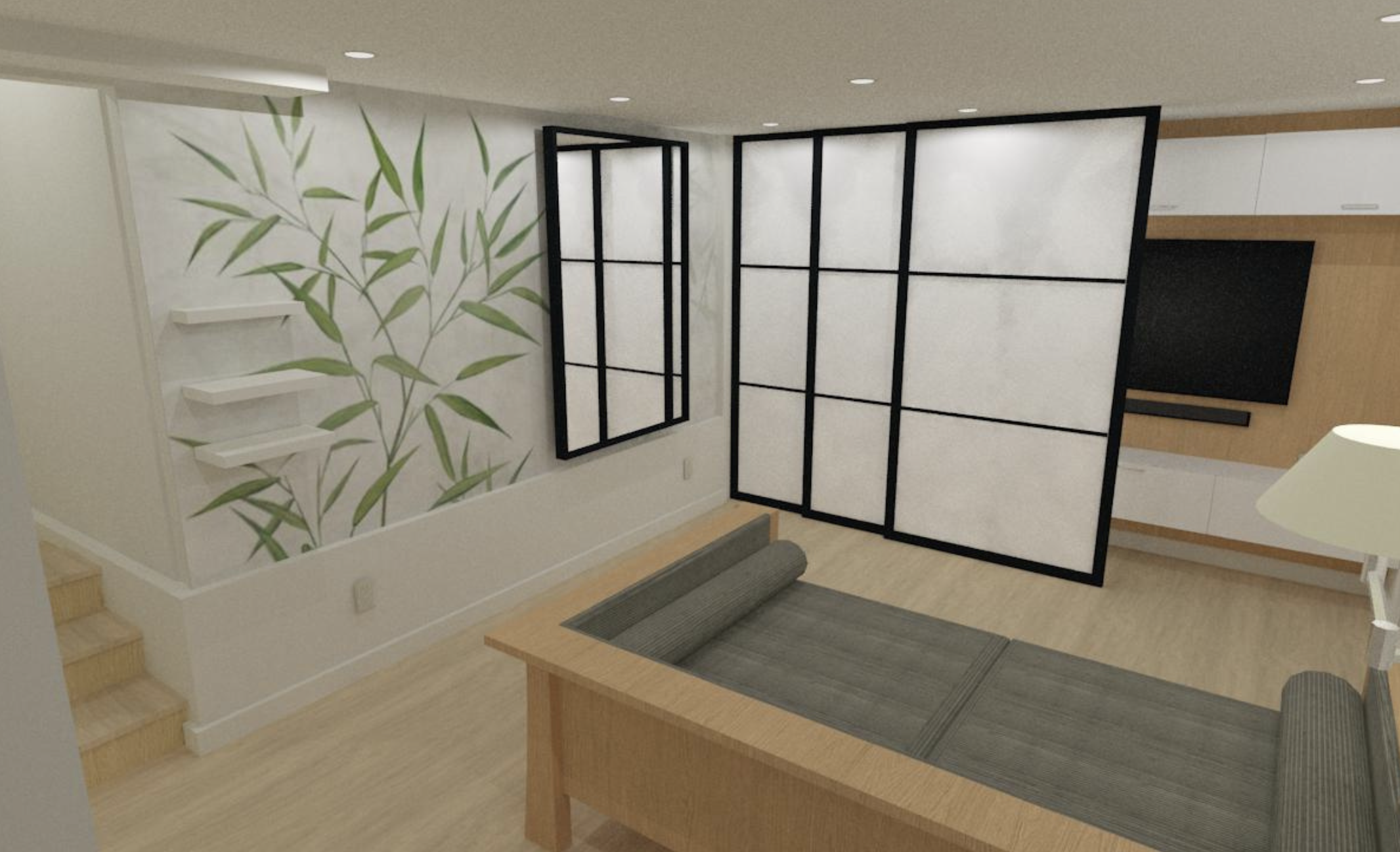
Home theatre and guest room project rendering for a Montreal client.
Questions to Ask Before You Build
A lifestyle review is always a great place to start. Custom means it can be built to your needs, so giving some thought to how you will live in the space will definitely increase your satisfaction with the final outcome. Here are some questions to think about:
How do you actually use the room? Movie marathons, game nights, and hosting all place different demands on a space.
What do you want to display? Measure your collection first, so each piece gets the right height and light.
Do you want a bar? Think about what you serve and how many guests you typically host.
What needs to be hidden? Count your devices, then plan ventilation, cable routing and access.
How large is your screen, and where will you sit? Viewing distance and eye level should guide the TV height.
What is the design concept for the whole room? While the unit will be a key focal point, it should be part of an overall design concept for the room.
Custom built-ins can multi-task for you
Custom built-ins are more than storage. They are designed to fit your space, with materials chosen to harmonize with the rest of your home. They work as a home art gallery and bookshelf, house your TV and sound system with the technology out of sight, and can give you a dedicated, organized bar for cocktail hour. The result is a room that moves from relaxed to refined retreat without rearranging a thing.
If you're considering custom built-ins for your home, start with how you want the room to feel. The design follows from there.
Ready to turn your TV wall into the heart of your home? At Spaces by T, we design living spaces with custom built-ins tailored to the way you live. To start the conversation today, book a consultation.
References:
The Popcorn Report, Faith Popcorn
https://www.amazon.ca/Popcorn-Report-Faith-Future-Company/dp/B000C4SGNM?th=1