
When to Start Your Interior Design Project?
It may be sooner than you think.
When clients ask when they should bring in an interior designer, the honest answer is almost always: earlier than you’d expect. Many people picture design as the fun part at the end, when the furniture arrives and the art goes up. But the visible finish line is the result of months of planning that happens long before anyone picks up a hammer.
If you want your project finished by a particular date—whether that’s the holidays, a move-in date, a wedding, the start of the school year, or a vacation—plan to begin at least three to six months beforehand. For larger remodels and renovations, you may need to allow even more time.
What Happens Before Construction Begins?
The front end of a design project is where the most important decisions are made. It’s also the least visible, and it takes real time to do well.
Design concept and mood boards. Before anything is selected or purchased, we need to define the direction: how you want the space to feel, how you live in it, and what will make it work for you. Concepts are developed, presented, refined, and approved. Good design isn’t rushed, and this phase often involves collaboration and several rounds of revisions.
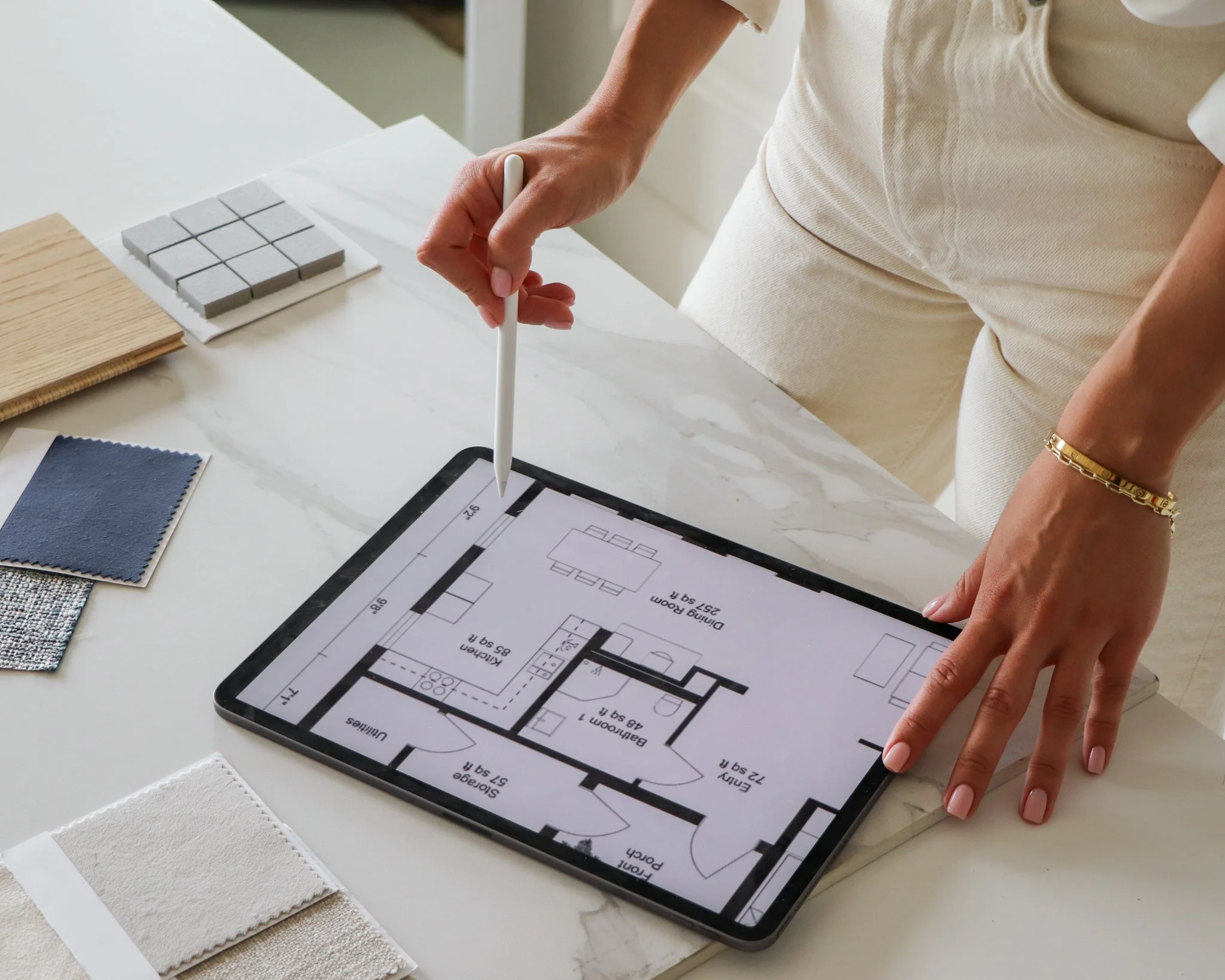
Floor plans and space planning. Layouts need to be drawn, tested, and adjusted. Where does the furniture go? How do people move through the room? What needs to move, be added, or removed? Changes to plumbing, electrical, or walls need to be worked out on paper before they’re worked out on site, where changes are far more costly.
Furnishings and finishes sourcing. This is where timelines surprise people the most. Tile, stone, lighting, plumbing fixtures, hardware, fabrics, and furniture all need to be selected, compared, and sampled. Then there are lead times: custom cabinetry, upholstery, and special-order pieces can take many weeks, sometimes several months, to be made and delivered. Something ordered on impulse in month five may not arrive until month nine.
Estimating and budgeting. Once selections are made, the project needs to be priced accurately. This means itemized quotes, allowances, and a realistic budget with a contingency, so there are no unwelcome surprises halfway through.
Contracting the trades. Good contractors, electricians, plumbers, painters, and installers are often booked weeks or months in advance. Getting quotes, comparing scopes of work, checking references, and signing contracts all take time, and the best trades will not wait for a project that isn’t ready.
Why Starting Late Costs More
When the front end is rushed or skipped, the consequences show up later:
Rushed decisions. Selections made under pressure are more likely to be regretted.
Compromised choices. If your first-choice product has a 16-week lead time and you only have 8, you settle for whatever is in stock.
Higher costs. Rush orders, expedited shipping, and last-minute changes on site add up quickly.
Delays and stress. A missing part can hold up an entire trade, which pushes back everything that follows.
Limited availability. The best trades and designers are booked well ahead. Starting early gives you more scheduling flexibility.
A Realistic Timeline: Every project is different, but as a general guide: 6-4 Months before Completion.
Here is a break-down:
Months 6 to 4 before desired completion: Consultation, design concept, mood boards, and space planning.
Months 4 to 3: Finalizing floor plans, selecting furnishings and finishes, and preparing estimates.
Months 3 to 2: Approving the budget, contracting the trades, and placing orders, especially for long-lead items.
Final 2 months or so: Construction, installation, and finishing touches. A well-prepared project moves smoothly here because the hard decisions are already behind you.
Smaller projects, such as a single room refresh or interior decor, may fit toward the shorter end of that range. Full renovations and remodels, custom millwork, or projects with structural changes will need the longer end, or more.
The Bottom Line
Starting early doesn’t mean your project takes longer. It means the work happens in the right order, at the right pace, so that when construction begins, everyone knows exactly what they’re building and every material is on its way.
If you’re thinking about a project, even if it feels far off, the best time to reach out is now. A few conversations at the beginning can save you months of stress, and a great deal of money down the road.